In services targeting North American users, choosing an East US cloud server is one of the common strategies for low latency. This article systematically explains how to optimize various aspects such as geographical location, network links, CDN, load balancing, DNS, and monitoring in order to improve access speeds for users in North America, while also ensuring reliability and compliance.
Cloud servers in the eastern United States are located near the East Coast and major nodes in central North America, offering a clear latency advantage due to their physical proximity. For North American users, the time to first byte (TTFB) and round-trip latency are lower, thereby improving the immediacy of page loading and API responses.
Being geographically close to target users can significantly reduce transmission latency, but operator interconnection points and city-level backbone networks also need to be considered. Choosing a data center near major Internet exchange points (IX) can further reduce hops across network segments and packet loss.
Sufficient bandwidth and diverse exit links can reduce packet loss and retransmissions caused by congestion. Peak throughput, concurrent connection count, and the upstream/downstream ratio should be evaluated to ensure that cloud servers in the Eastern US can maintain stable throughput and low latency during peak times.
By leveraging a CDN at the global or North American level, static resources can be cached on the nearest nodes, reducing the frequency of requests to the origin server. For cloud servers in the Eastern United States, appropriate caching strategies and cache expiration rules should be configured to reduce the load on the origin server and improve the perceived speed for users.
Deploying a load balancer and distributing traffic across multiple availability zones can improve availability and stability. Settings such as session persistence, health checks, and weighted routing help avoid single-point congestion, while automatic scaling maintains performance resilience.
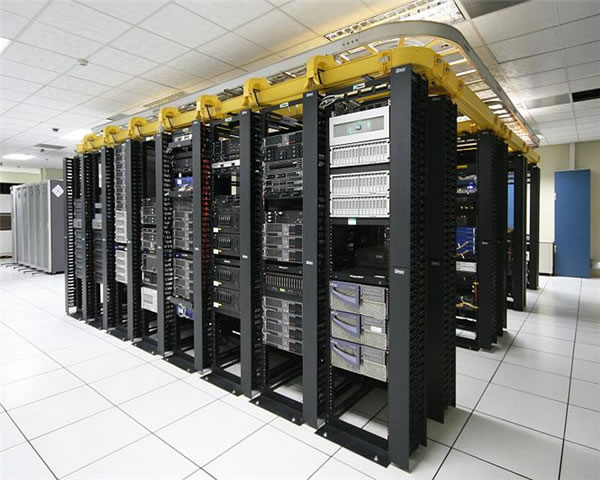
Smart DNS (routing based on geographic location or latency) can direct users to the nearest or lowest-latency US East cloud server node. Combined with health checks, it ensures that access is always directed to available and highest-performing instances.
Continuously monitoring latency, packet loss, response time, and User Side Metrics (RUM) is crucial. Through synthetic testing and real-user monitoring, bottlenecks are identified and the effectiveness of optimizations is verified, forming a closed-loop performance optimization process.
Essential security measures (WAF, DDoS protection, TLS optimization) should not significantly increase latency. Properly configure TLS session reuse, minimum handshake times, and edge security policies to ensure compliance and security while also maintaining access performance.
It is recommended to first set up basic instances in the Eastern United States and conduct latency baseline testing. Gradually introduce CDN, intelligent DNS, and load balancing, while using monitoring data to make iterative optimizations. Route by region and implement a phased rollout to reduce risks.
Combining geographical advantages, bandwidth and links, CDN, load balancing and intelligent DNS, as well as continuous monitoring, is the complete approach to using Eastern US cloud servers to improve access speeds for North American users. Deploying in phases as recommended and optimizing with data-driven approaches can lead to significant improvements in the user experience and stability.
- Latest articles
- Cultural Differences: Common Etiquette And Communication Techniques Chinese People Use Korean Servers
- How To Take A Good Group Photo Of A Korean Boy Band Standing In A Row On The Red Carpet
- Enterprise-level Analysis Of How Taiwan Server Accelerators Enhance Cross-border Access Experiences
- Buying Cloud Servers In Thailand: How To Quickly Deploy Your Business Using Images And Templates
- Steps And Common Problem Solutions For Deploying A Native IP Server In Vietnam From Scratch
- Does High VPS Latency In Telecom Korea Affect SEO And User Retention? Data Evaluation Methods
- Taiwan Telecom CN2 Broadband Performance In Remote Work And Video Conferencing Tests
- Industry Case: Differences In The Performance Of Cloud Servers In Hong Kong And Singapore In The Financial And Gaming Industries
- How To Choose A Vietnam Cloud Hosting VPS Rental - A Guide To Comparing Merchants And Bandwidth Nodes
- Interpretation Of Alibaba Cloud Singapore's CN2 Access Advantages And International Network Layout Recommendations
- Popular tags
-
Is The US Cloud Server Easy To Use? User Experience Sharing
This article shares the user experience of American cloud servers, analyzes its performance, stability, security, etc., and helps you understand whether American cloud servers are easy to use. -

Is There Any Benefit Of VPS Hosting In The United States Worth Investing In?
This article discusses the many benefits of US VPS hosting and analyzes why it is worth investing. -

Recommendation And Evaluation Of Service Platforms That Support Wechat Payment In The United States
this article recommends and evaluates the us vps service platform that supports wechat pay to help users choose the most suitable service.